
Growing Fast in Battery Technology — but Struggling with Technical Talent?
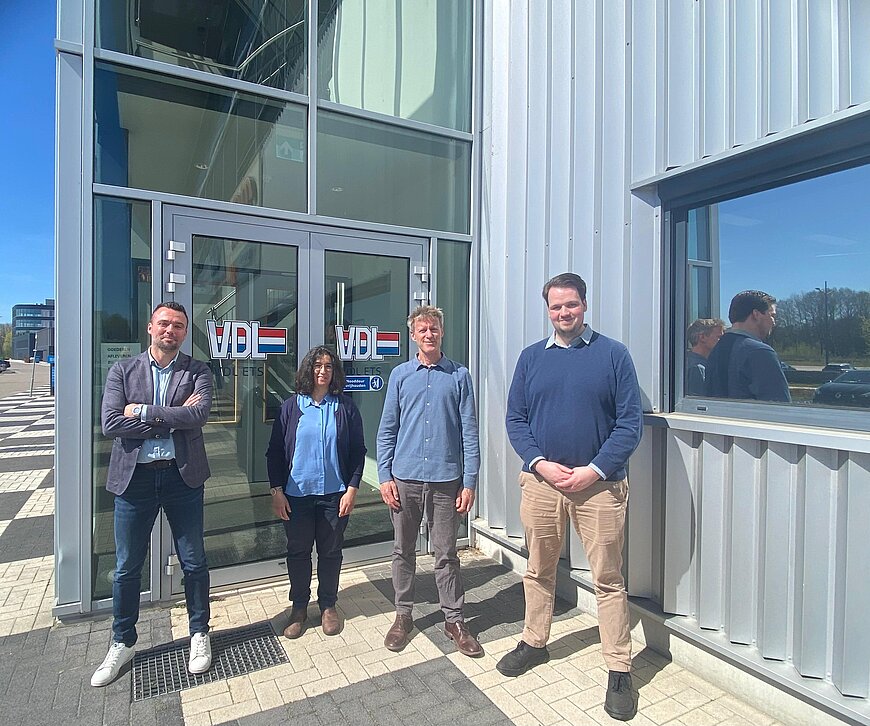

On 8 April 2026, the National Institute for Public Health and the Environment (RIVM) visited Battery Competence Cluster – NL (BCC‑NL) for a dedicated knowledge session on battery safety, sustainability and regulation, followed by a site visit to VDL Enabling Transport Solutions (VDL ETS) in Helmond. The visit marked an important step in the ongoing dialogue between public authorities and the Dutch battery ecosystem and underlined the growing role of battery safety as a strategic success factor in the development of a European battery value chain.
RIVM Knowledge Session: Aligning Science, Policy and Innovation
During the morning session, RIVM experts presented to BCC‑NL members and partners, sharing insights into RIVM’s role as an independent scientific advisory body to the Dutch government. Battery-related topics were discussed within RIVM’s wider mandate on public health, environmental protection and safety, highlighting how scientific evidence informs national and European policymaking.
Key topics addressed included:
- Science-based policy and regulation
RIVM’s role in supporting ministries with independent advice on battery safety, sustainability and environmental impact assessments. - Battery safety and fire incidents
Monitoring and analysis of safety incidents across the battery lifecycle, particularly in storage, transport, recycling and end-of-life phases, and the importance of data collection and cross-sector governance. - Chemical safety and environmental impact
Substances of concern in batteries, responsibilities under REACH, and the interaction between environmental protection and human health considerations. - Safety and Sustainability by Design (SSbD)
Integrating safety, circularity, sustainability, critical raw materials and cybersecurity from the earliest design stages of battery systems. - Governance and collaboration challenges
The need for better coordination between regulators, industry, inspection bodies, emergency services and insurers as battery technologies continue to scale.
The presentation led to an open and engaged discussion, demonstrating both the complexity of battery-related risks and the importance of early alignment between innovation, regulation and practical implementation.
From Policy to Practice
In the afternoon, participants visited VDL Enabling Transport Solutions (VDL ETS) in Helmond, gaining direct insight into how battery systems are developed and integrated into electric transport solutions. It illustrated how regulatory requirements, safety standards and sustainability goals are translated from policy and research into industrial reality, highlighting the challenges and opportunities of scaling battery innovations responsibly.
Battery Safety as a Strategic Advantage
Beyond the individual visit, the meeting reflects a broader ambition: RIVM and BCC‑NL are intensifying their cooperation to further strengthen the Netherlands’ position in battery safety within the European battery value chain.
As Europe builds strategic autonomy in batteries, safety is increasingly becoming a decisive factor — not only for societal acceptance of battery applications, but also for the ability to scale innovations successfully to market. Alongside manufacturing capacity and technological development, there is growing demand for reliable expertise in safety, testing, validation and certification.
The Netherlands already has a strong knowledge base and infrastructure in this field, with multiple organisations active in battery safety research, testing and regulation. By strengthening cooperation between RIVM and BCC‑NL, this expertise can be better connected, shared and mobilised for innovation projects and industrial application.
The intensified collaboration focuses on:
- Enhancing knowledge exchange between public authorities, research organisations and industry
- Supporting innovation and demonstration projects with safety and regulatory expertise
- Better positioning Dutch organisations within European programmes and partnerships
Connecting Stakeholders for a Responsible Battery Future
The combined visit to BCC‑NL and VDL ETS demonstrated the value of direct interaction between policy-oriented knowledge institutes and industry-led innovation ecosystems. Bringing together RIVM’s scientific and regulatory expertise with applied industrial innovation provides a comprehensive perspective on the challenges ahead — and on how they can be addressed collaboratively.
For Battery Competence Cluster – NL, the visit directly supports its mission to connect stakeholders, facilitate knowledge exchange and help ensure that innovation in batteries goes hand in hand with safety, sustainability and regulatory readiness — essential foundations for a resilient and responsible battery ecosystem in the Netherlands and Europe.