Battery Production Days 2026 in Aachen: From Innovation to Industrial Reality
Photographs copyright BPD
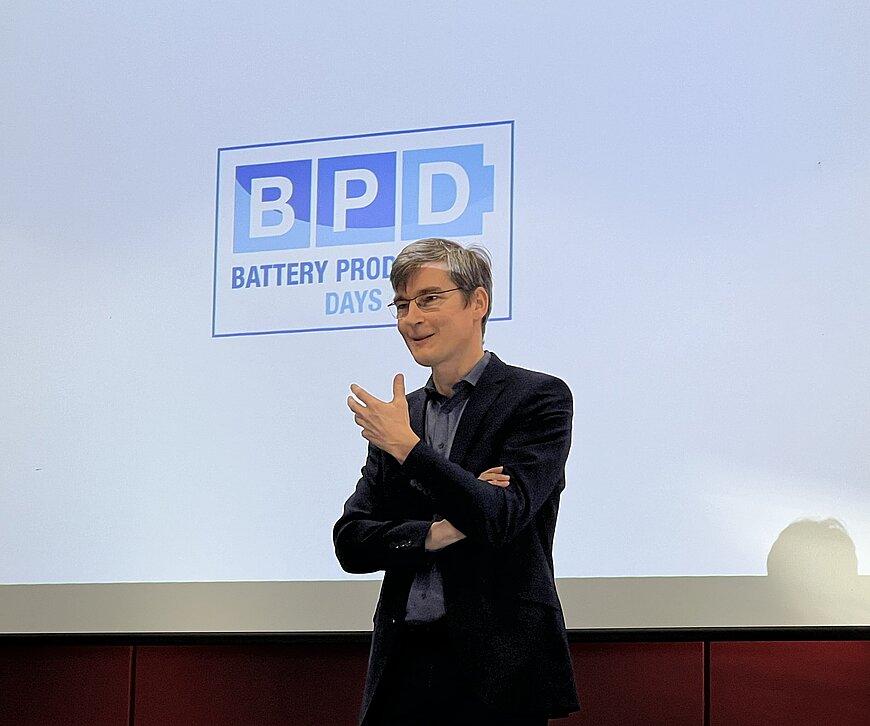
On 20-21 October 2026, Ulas Kudu Innovation Architect of BCC-NL attended the 2nd Battery Production Days in Aachen, Germany. It was an opportunity to better understand how Europe can strengthen its position in the global battery race and, more importantly, how innovation can successfully make the journey from the laboratory to full-scale production.
Bringing together battery manufacturers, researchers, technology providers and industry leaders, the event offered valuable insights into the opportunities and challenges facing Europe's battery ecosystem. For BCC-NL, it provided a unique perspective on where the industry is heading and what will be needed to remain competitive in the years ahead.
A Close Look at the Future of Battery Manufacturing
Across presentations, discussions and technology showcases, a clear theme emerged: manufacturing has become a critical differentiator.
Another recurring theme was the importance of production flexibility. As battery technologies evolve, manufacturers must be able to adapt to new cell formats, chemistries and process requirements without major reinvestments. Flexible equipment enables faster scale-up and technology adoption while allowing multiple customer requirements and market segments to be served from a single production line, reducing both CAPEX and OPEX. For Europe, where competitiveness depends on innovation rather than volume alone, flexible manufacturing can be a key advantage in accelerating industrialization and reducing investment risk.
The conference highlighted how the next generation of battery factories will rely on advanced production technologies, digitalisation and process optimisation to improve quality, reduce costs and accelerate scale-up. From innovative electrolyte filling methods to energy-efficient dry electrode production and AI-supported quality control systems, the focus was firmly on making battery production smarter and more sustainable.
Beyond individual technologies, the event demonstrated the growing importance of integrated production systems, where equipment, data and process expertise work together to maximise performance.

More Than Technology Alone
One of the most valuable lessons from Aachen was that successful battery production is about much more than developing a good cell chemistry.
Several speakers emphasised that a battery's performance is heavily influenced by the manufacturing process itself. Small variations during production can affect quality, yield and long-term reliability, making process control a major factor in commercial success.
This reinforced the importance of considering manufacturability from the earliest stages of product development. A breakthrough in the laboratory only becomes valuable when it can be produced reliably, efficiently and at scale.
A Key Reflection: Innovation Needs Production
Among the many discussions, one topic stood out in particular: Europe's industrial future.
While some experts explored models in which research and intellectual property remain in Europe while large-scale manufacturing is conducted elsewhere, the visit prompted a different reflection.
Manufacturing should not be viewed simply as the end result of innovation. Manufacturing is also a source of innovation in its own right.
Production facilities continuously generate new knowledge, practical expertise and insights that cannot be fully captured through research alone. Factory operations create learning opportunities that improve products, optimise processes and strengthen entire industrial ecosystems.
History has shown that when production leaves a region, valuable know-how often follows. For Europe's battery sector, maintaining strong manufacturing capabilities is therefore not only an economic objective but also a strategic necessity.
Opportunities for the Dutch Battery Ecosystem
The event also highlighted the importance of collaboration across the battery value chain.
For the Netherlands, opportunities exist in advanced manufacturing equipment, automation, process optimisation, digital technologies and pilot production facilities. Strong cooperation between industry, research organisations and public partners will be essential to transform technological expertise into industrial success.
Cross-border collaboration, particularly with leading battery regions such as Aachen, will continue to play an important role in accelerating innovation and strengthening Europe's battery ecosystem.

Looking Ahead
The strongest takeaway from the visit is straightforward: Europe does not lack innovation. What matters now is the ability to industrialise that innovation successfully.
Battery leadership will be determined not only by scientific breakthroughs but also by the ability to manufacture efficiently, learn through production and continuously improve. The discussions in Aachen demonstrated that Europe has the knowledge, talent and ambition to succeed. The challenge is ensuring that innovation and manufacturing remain closely connected.
As Europe's battery industry continues to mature, that connection may prove to be its most valuable competitive advantage.
Contact
If you would like additional information about this visit. Please contact: