‘Without Talent, There Is No Energy Transition’
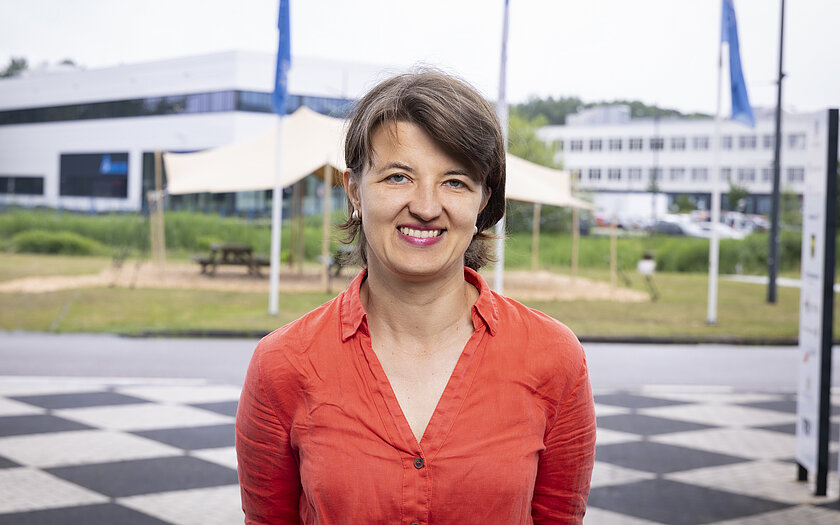
The energy transition and the electrification of society are gathering pace. To reduce its dependence on Asian and American market dominance, the Netherlands is making significant investments in its own circular battery value chain through the National Growth Fund programme, Material Independence and Circular Batteries (MICB). Yet factories, innovative recycling processes and next-generation battery technologies cannot succeed without a highly skilled workforce. Within the Battery Competence Cluster - NL (BCC-NL), Dr Karolina la Fors leads the Human Capital pillar. Her mission is clear: to establish the Netherlands as a leading international hub for battery talent by 2035.
“You can have ambitious plans for industrialisation and energy security, but Human Capital is the decisive factor,” emphasises Karolina la Fors.
“It is people who ultimately design, manufacture, maintain and recycle these technologies. Public debate often focuses on finance and grid capacity as the key bottlenecks. Yet financing, energy infrastructure and workforce availability are not separate challenges; they are interconnected and reinforce one another. Without the right talent, every investment will eventually stall.”
The battery sector represents a significant growth market for Dutch manufacturing, creating opportunities for new businesses, innovation and high-quality employment. However, realising that potential requires the right people and the right skills. Without the necessary expertise, we cannot bring our technologies from lab to fab. As La Fors points out, Human Capital is therefore a critical prerequisite for accelerating time-to-market and strengthening industrial competitiveness.

Six Workstreams Across the Entire Value Chain
The challenge is substantial. While the technological pillars within the MICB programme focus on specific domains, including recycling, sustainable battery components, heavy-duty mobility and stationary energy storage systems, the Human Capital Agenda (HCA) cuts across all programme areas and the entire battery value chain.
To provide direction and focus, BCC-NL has developed an agenda built around six interconnected workstreams:
- Governance and ecosystem development
- Labour market forecasting
- HR innovation and modern employment practices
- The Higher Education Talent Pipeline (HBO/WO)
- Higher professional education (HBO)
- Vocational education and practical training (MBO)
“Together, the consortium covers all levels of education, from vocational training to university education, as well as post-entry professional learning through partners such as ARN and Innovam.”
Strong Coalition
The Human Capital coalition brings together a strong consortium of fourteen leading educational and knowledge institutions, ranging from Noorderpoort and the University of Groningen in the north of the country to TU Delft, TNO, Saxion, the University of Twente, HAN University of Applied Sciences, Utrecht University of Applied Sciences, Fontys, Summa Automotive College and Eindhoven University of Technology.
From Policy Silos to Cross-Sector Collaboration
One of La Fors’ key observations is that policymakers and educational institutions still too often operate within their own silos. “There is national policy for semiconductors, policy for photonics and policy for quantum technologies. In practice, however, the underlying technologies, such as battery technology, are multidisciplinary and require systems integration. The industrial skill sets required are largely complementary across sectors.”
She points to battery scale-up LeydenJar, known for its silicon-anode technology, as a clear example. “What they are developing is directly relevant not only to the mobility sector, but also to the high-tech and semiconductor industries. The talent we train in systems engineering, electrochemistry and automation can contribute across multiple sectors. By designing education and training programmes that transcend sector boundaries, we avoid reinventing the wheel and equip professionals with broader, more adaptable skill sets.”
La Fors also highlights a direct link between urgent societal challenges and Human Capital. Grid congestion is currently preventing many businesses from expanding their operations. “Within our ecosystem, organisations are developing innovative Long Duration Energy Storage (LDES) solutions, including iron-air, flow and salt-based batteries. These systems can help businesses overcome grid capacity constraints. However, designing, deploying and safely managing battery storage installations requires a skilled workforce. At BCC-NL, we actively connect the challenges of energy infrastructure, permitting and human capital development.”
Tangible Results on the Ground
Although the National Growth Fund programme is still in its development phase, the first educational results are already becoming visible across the Netherlands:
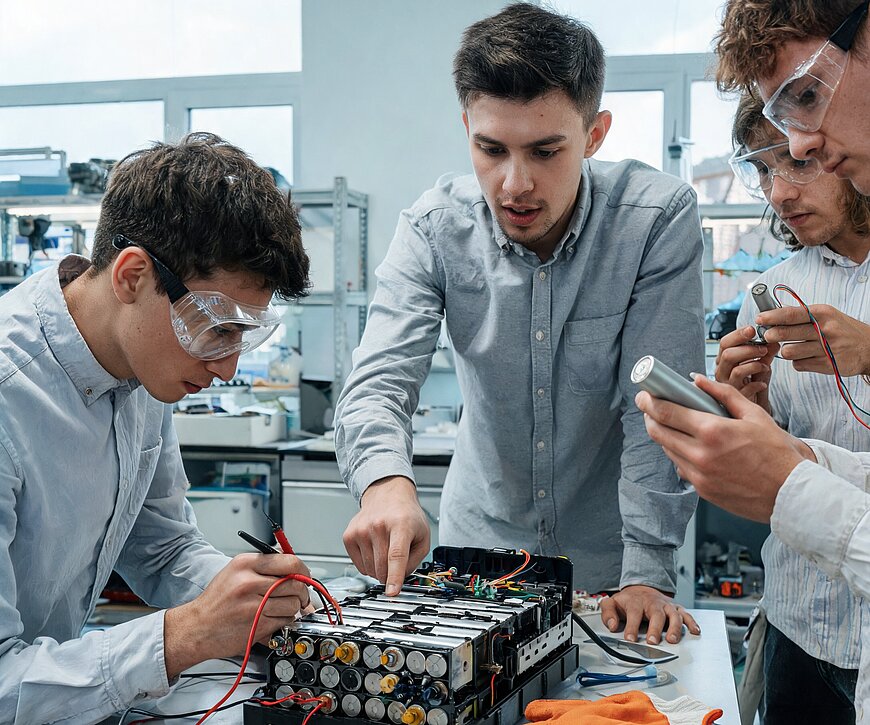
MBO – The Battery Box: This practical educational module on battery safety and technology has already been downloaded by 12 of the Netherlands’ 38 technical vocational colleges. As a result, the programme is expected to reach approximately 2,900 students in the short term.
HBO – Master System Design: Fontys Automotive has developed a number of advanced modules, including Battery Technology and Automotive Simulation & Modelling.
WO – TU Delft Learning for Life: Within TU Delft’s post-academic education programme, five master's-level courses have been developed featuring dedicated battery competence components.
Lifelong Learning and Safety: Training provider Innovam has introduced the learning pathway Safe Working on Electric Vehicles and Batteries According to NEN 9140, which is now accredited and operational. Additional training programmes are currently being developed in areas such as battery diagnostics and the mandatory European Battery Passport.
Ambition: Learning Ecosystems and European Alignment
Looking ahead to the medium term, La Fors has several clear milestones in mind. During 2027, the renewed BCC-NL website is expected to serve as an interactive guide for anyone wishing to develop their skills within the battery sector. The platform will provide a comprehensive overview of all relevant educational programmes and modules in the Netherlands, directly linked to the European ALBATTS skills framework and concrete career opportunities.
For the longer term, between 2031 and 2035, the ambition grows even further. “We want to create a seamless and permanent pathway between vocational education, universities of applied sciences and research universities,” says La Fors.
“We also need hybrid learning environments: physical facilities and pilot production lines where theory and industrial practice come together. Initiatives such as the Open Battery Industrialisation Centre (OBIC) and the BatCell Lab in Twente provide excellent examples. They enable students and existing professionals alike to gain hands-on experience with the production technologies of the future.”
Across all these initiatives, inclusion and the sharing of best practice play an important role. For an inspiring example, La Fors only needs to look out of her office window.
“Companies such as DENS, here on the Automotive Campus, demonstrate that innovative employment practices can go hand in hand with social impact, for example by creating opportunities for people who face barriers to entering the labour market. By sharing these kinds of best practices, we are building not only a technologically strong battery sector, but also one that is inclusive, resilient and future-ready.”
Contact
Would you like to learn more about the projects within this pillar or join one of the consortia? Contact: