“We Must Not Only Scale Up, but Also Strategically Anchor Our Technological Lead”
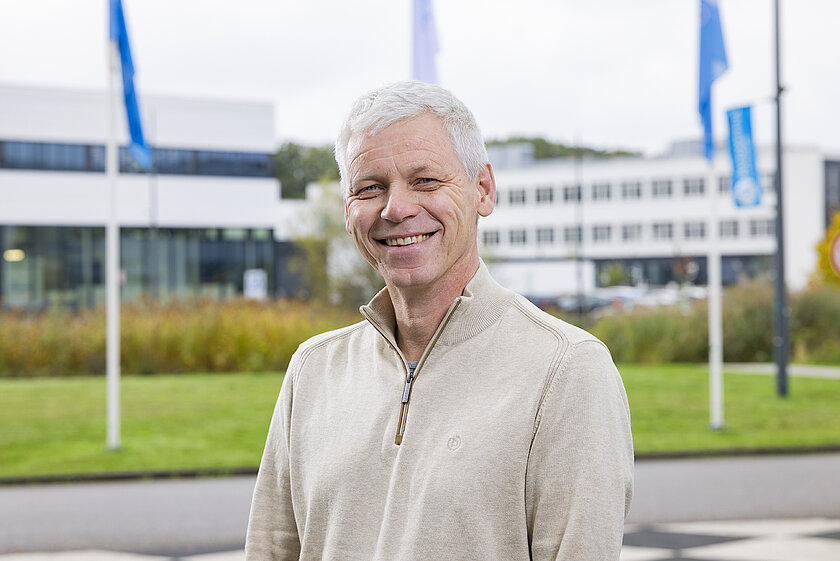
While many European battery cell initiatives struggle to compete in mass production at rock-bottom prices, the Netherlands, through the Battery Competence Cluster - NL (BCC-NL), has chosen a more nuanced path. André Schilt, figurehead of the pillar Sustainable Battery Components and Production Processes, explains how the Netherlands is building an indispensable link in the international battery value chain through high-tech equipment, advanced components, and flexible cell manufacturing. “We are not competing on volume, but on performance, agility, and technological excellence.”
The European battery industry is at a crucial stage. Gigafactories focused solely on producing gigawatt-hours for standard passenger vehicles are facing significant headwinds due to the immense economies of scale and price competition from Asia. According to André Schilt, however, this creates opportunities for Dutch industry.
Within the National Growth Fund programme Material Independence & Circular Batteries (MICB) ), Schilt leads the programme line dedicated to new materials, production processes, and scaling up. “A second wave is emerging in Europe,” Schilt explains. “This wave is clearly moving toward specialization. Electrification is no longer limited to conventional passenger cars. Think of heavy transport, maritime applications, aviation, industrial applications, and defense. All these sectors require specific battery characteristics: extremely high energy density, ultra-fast charging, or exceptional robustness. That demands an entirely different type of production system.”

The Three Pillars of the Programme
Schilt’s pillar is built around three interconnected themes that form the foundation of the Dutch battery ecosystem:
- New Battery Materials and Components: Developing superior materials, particularly advanced anodes (such as silicon and 3D lithium-metal), solid-state electrolytes, and sodium-ion technologies.
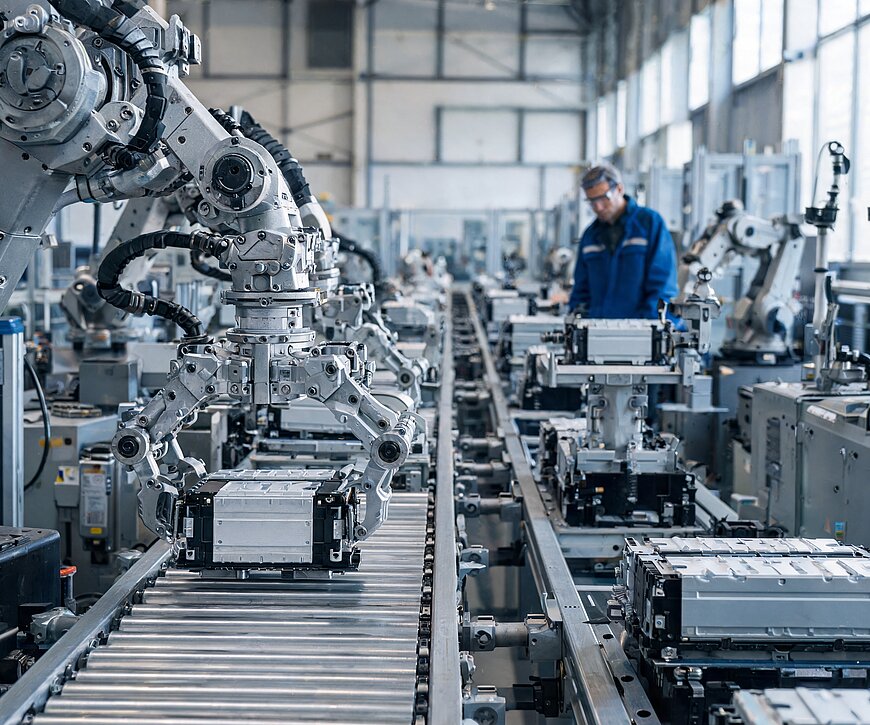
- Advanced Manufacturing Equipment: Designing machines flexible enough to switch rapidly between different battery chemistries and cell formats.
- Battery Cell Production Facilities: Establishing dedicated pilot and manufacturing lines to bring innovations from the laboratory to the market.
"Onze kracht ligt in wendbaarheid."
“Onze kracht ligt in wendbaarheid,” legt Schilt uit. “Een gigafabriek die 50 gigawattuur aan identieke cellen per jaar uitspuugt, kan niet zomaar even van celchemie wisselen. Als je een yieldverlies hebt, stort je businesscase in. Wat wij nodig hebben, is hightech apparatuur die flexibel is aan de ingang én aan de uitgang. Aan de invoerzijde moeten we razendsnel de nieuwste materiaalvindingen kunnen integreren; aan de uitvoerzijde moeten we maatwerk leveren voor specifieke niche- en heavy-duty-applicaties. Door onze sterke Nederlandse machinebouw en materiaalkennis te koppelen via procesautomatisering en AI, kunnen we die complexe processtappen veel sneller optimaliseren.”
Bridging the Gap: From Lab to Factory
The Netherlands is home to leading startups and scale-ups that are at the forefront of global battery innovation. Companies such as LeydenJar, E-magy (both specializing in porous silicon anodes), and LionVolt (focused on 3D lithium-metal anodes) demonstrate that the knowledge exists to increase energy density by tens of percent. However, the transition from laboratory-scale development to full industrial production remains notoriously challenging and capital-intensive.
“This is where deep-tech companies often struggle,” emphasizes Schilt. “The leap from megawatt-hours to hundreds of megawatt-hours or even gigawatt-hours is enormous. Companies find this scale-up extremely difficult. As a cluster, we help build consortia and mobilize public-private funding, including through MICB and NWO, so that we do not lose these gems to foreign interests. We must prevent Dutch innovations from being acquired for a fraction of their value by parties outside Europe during a vulnerable stage of development. If that happens, we lose not only our strategic intellectual property but also our future earning potential.”
To bridge this gap, the Netherlands is investing in shared facilities such as the recently established Open Battery Industrialisation Centre (OBIC) at the Automotive Campus in Helmond. Through a collaboration between TNO, Holst Centre, and VDL ETS, OBIC acts as an open innovation centre where companies can validate and scale up cell designs, materials, and production processes under representative industrial conditions.

Defense and Dual-Use Applications as Accelerators
One notable and powerful catalyst for the sector is the growing urgency surrounding strategic autonomy and defense applications. On behalf of TNO, and in close coordination with the cluster, Schilt is involved in feasibility studies for establishing a domestic battery cell production facility in the Netherlands.
“Where is the strongest demand for high-performance batteries today? Defense,” Schilt states unequivocally. “Defense organizations urgently need batteries with exceptional performance for drones, communication systems, and mobile applications. They have urgency, and geopolitically they simply cannot afford to depend on Asian supply chains. By using defense as a launching customer and cleverly linking this to dual-use applications for civilian markets, such as heavy-duty transport and aviation, we can create momentum for a national production facility.”
Collaborating from a Position of Strength
Although the Netherlands does not aim to control the entire battery value chain on its own, Schilt believes it is essential to maintain so-called “control points.”
“You do not need to do everything yourself, but you do need something that earns you a seat at the table,” he says. “The Netherlands is exceptionally strong in anode technology. If you firmly establish that position, you become an attractive partner for international giants producing cathodes. This is exactly what BCC-NL is driving: building international bridges. A good example is our intensive collaboration with Germany, which was our focus partner country during the most recent Dutch Battery Day. We combine Dutch innovation and materials expertise with Germany’s strengths in machine building and the automotive industry.”
The popularity of Battery Day in ’s-Hertogenbosch demonstrated the success of this integrated approach, with nearly 600 professionals and international delegations gathering at the event.
“International partners, including those from South Korea, are genuinely impressed by how well organized we are in the Netherlands. Knowledge institutions, SMEs, large companies, and government bodies are all pulling in the same direction through a shared National Battery Agenda. That truly sets us apart from most other countries.”
Continuously Feeding the Innovation Pipeline
While production and industrialization currently deserve significant attention, Schilt warns against neglecting fundamental research during this stage of development.
“Industrialization and scaling are rightly at the center of policy today. But you only maintain your lead if you continue investing in what I call strategic innovations. Universities such as the University of Twente, TU Delft, Eindhoven University of Technology, and the University of Groningen are laying the foundations for the next generations of battery cells, including sodium-ion and solid-state technologies. TNO and its partners then translate these developments into practical technologies through facilities such as OBIC. If we do not continuously replenish this innovation pipeline, we risk falling behind within five or ten years. The real challenge is ensuring these two worlds work together seamlessly.”
Contact
Would you like to learn more about the projects within this pillar or join one of the consortia? Contact: